Taking orders through Instagram messages, phone calls or a contact form works until the volume grows. Then messages get missed, stock is promised twice, invoices are written by hand, and every order costs ten minutes of someone's time. A proper online shop fixes this: customers browse, choose, pay and get an invoice on their own, and your team handles exceptions instead of every order.
Coding Moose builds custom e-commerce systems for small and medium businesses in Germany, Austria, Switzerland, Poland and the United States. We focus on shops that need to be fast, easy to run without a developer and tightly integrated with stock, payments and paperwork.
What is included in an e-commerce project
The starting price covers a complete, production-ready shop:
- Catalog and checkout. Categories, product pages with variants such as colour and size, a cart and a checkout without forced account creation. Mobile-first, because most shoppers arrive from a phone.
- Payments your customers already use. Apple Pay, Google Pay and cards; BLIK and Przelewy24 for Poland; SEPA, PayPal and Klarna for the German-speaking market; WayForPay for Ukraine.
- Real-time stock and alerts. Inventory updates with every order, and low-stock alerts arrive before something sells out.
- Invoices and shipping labels. Generated automatically per order, with the right VAT treatment, so nobody types invoices by hand.
- A self-service admin panel. Your team adds products with photos and variants, manages orders and updates prices in minutes. No developer required for day-to-day work.
Common add-ons include integration with your accounting software or ERP, customer accounts with order history, discount codes and campaigns, and multi-language, multi-currency storefronts. The full breakdown is on the pricing page.
When a custom shop beats a platform
Shopify, WooCommerce and similar platforms are the right answer for many stores. We recommend a custom build when:
- Your products or pricing are not standard. Configurable items, made-to-order pieces, custom cakes with dozens of options, B2B price lists or minimum quantities.
- Speed matters for ranking and conversion. Platform themes with a dozen apps rarely load in under a second; a custom storefront does, which helps both Google and shoppers.
- Stock, orders and accounting need to be one system. Real-time inventory across channels, automatic documents and integration with the tools you already use.
- Fees have become a line item. Transaction fees, app subscriptions and theme licences add up. A shop you own has hosting costs of around ten dollars a month and no per-sale commission.
Two shops we built
SOVA NATALIIA is a designer clothing brand that used to take orders through Instagram messages and Telegram. We built her first online store: a bilingual storefront with catalog, variants, WayForPay checkout and a self-service admin. Pages load in under a second, the shop was Google Shopping-ready from day one with a 100/100 Lighthouse SEO score, adding a new piece takes about five minutes, and hosting costs around ten dollars a month. See the SOVA NATALIIA case study.
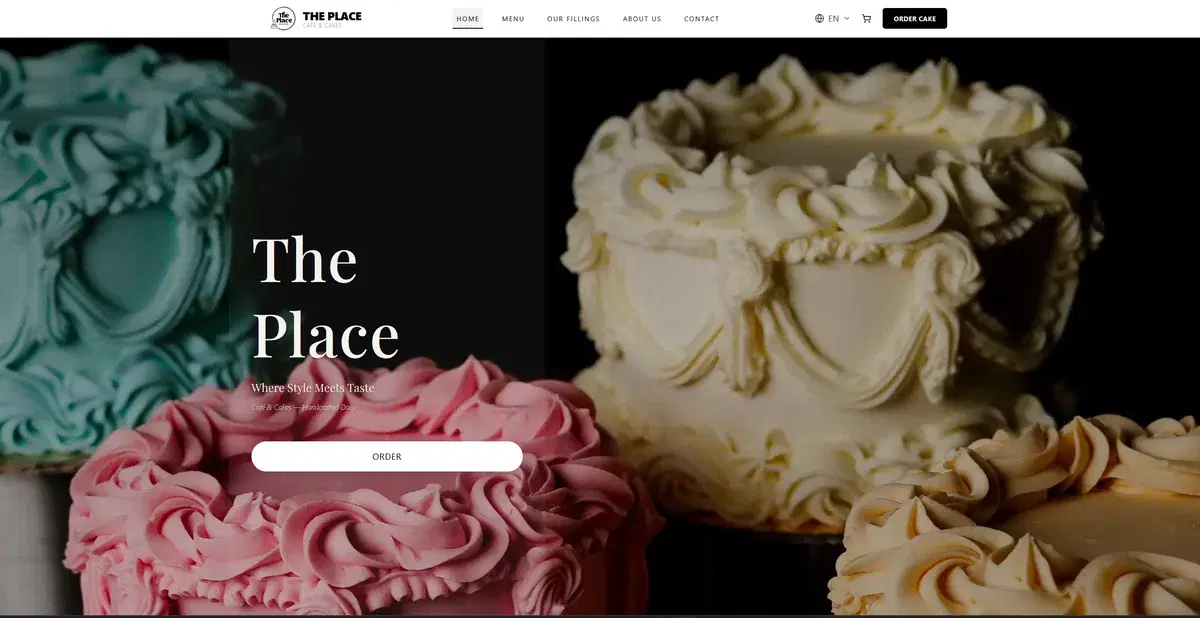
The Place, a restaurant and cake business in Poland, moved from Instagram DMs to an online ordering system with customisable products, delivery scheduling, Apple Pay, Google Pay and BLIK. Order processing dropped by 95% to under 30 seconds, and the business captures about 30% more orders because customers order around the clock. See the The Place case study.
How an e-commerce project runs
- Discovery call. A free conversation about what you sell, how orders arrive today, and which payment and shipping options your customers expect.
- Planning workshop. Catalog structure, variants, pricing rules, payment providers, shipping, invoicing and integrations are defined. You get a written scope, a fixed price and a timeline.
- Build with weekly demos. Your real products go into the shop during development, so what you test is what launches.
- Launch, training and handover. We deploy to your hosting, connect the domain, train your team on the admin panel and hand over the source code.
- Growth features later. Campaigns, customer accounts, new markets and integrations are added once the shop is earning.
Built for speed, search and longevity
We build shops with React, Next.js, TypeScript, Node.js and PostgreSQL, hosted on AWS with EU-based infrastructure in an account you own. Every storefront ships with structured product data, clean URLs, sitemaps, hreflang for multiple languages and image optimisation, and is tested against Google's Core Web Vitals. Customer data stays in the EU, and payments are handled by certified providers, so you never store card details.
Pricing and timeline
E-commerce projects start at €6,900 excluding VAT and take around two months. The price includes design, development, testing, deployment and full source code handover; hosting and domain are separate and cost about ten dollars a month for a typical shop. If you also need a custom CRM or workflow automation for order handling, combining them in one project usually earns a discount. Compare all solutions on the pricing page, or tell us what you sell and we will send a written scope and quote within a few days.